

Surgeries
Cataract
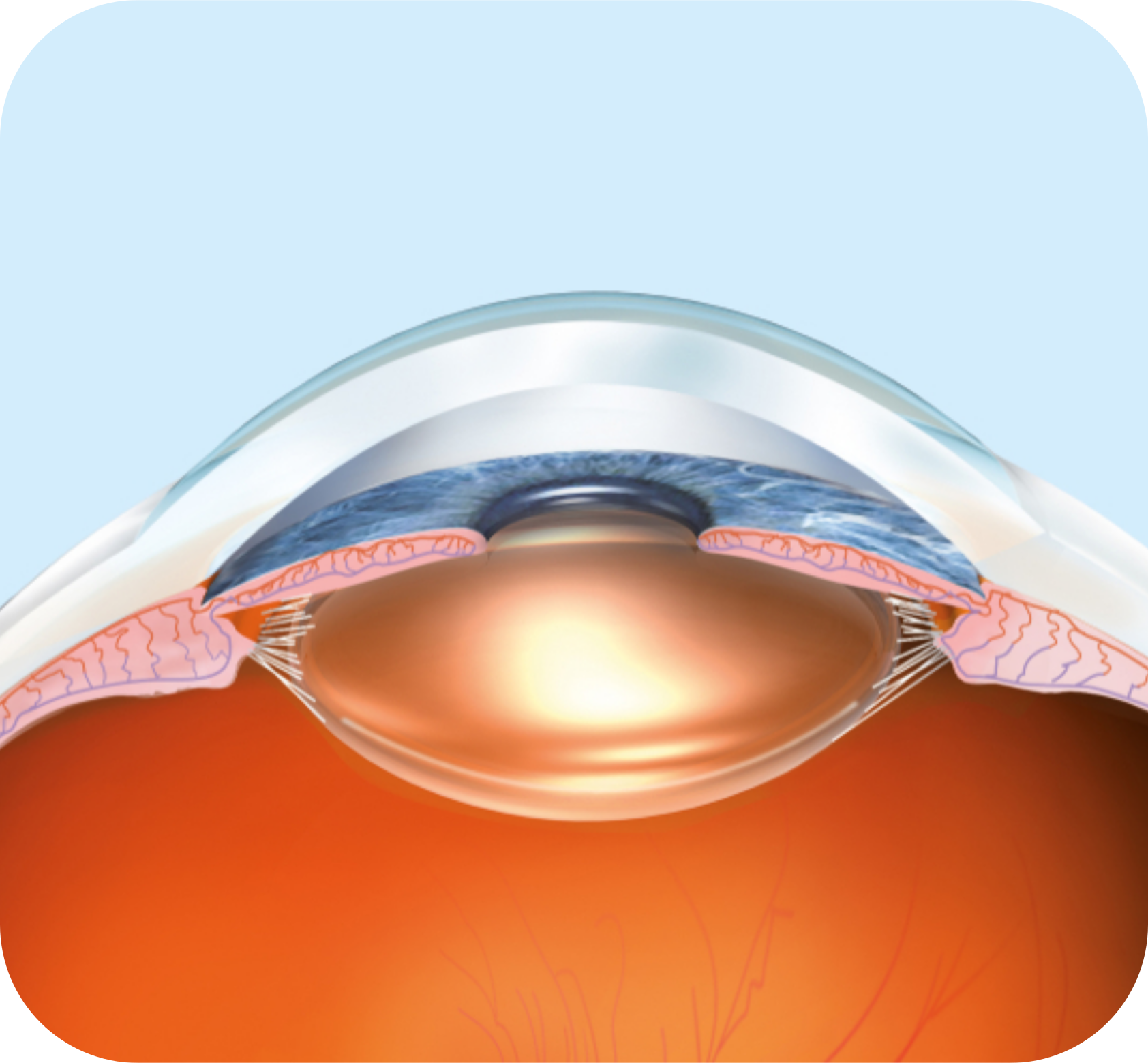
Cataract is characterized by the opacification of the lens, a natural lens located just behind the iris. The lens allows the eye to adapt to see clearly up close, especially when reading or performing any other activities requiring near vision. Over time, it loses its transparency and gradually becomes opaque.
Once a cataract begins, regular monitoring is essential to prevent any vision loss, which can sometimes lead to complete blindness.
Symptoms
- Progressive decrease in near and distant vision
- A sensation of glare from bright lights (car headlights when driving at night or in bad weather)

Surgical Treatment
Cataract Surgery
Surgery is the only treatment for cataracts. The ophthalmic surgeon will replace the opaque lens with an artificial lens, also known as an intraocular implant.
Before each operation, the ophthalmologist performs a fundus examination to ensure that the patient has no contraindications.
This operation is very common; it is the most frequently performed in France.
- Quick operation (between 15 to 30 minutes)
- Painless (local anesthesia)
Types of Implants
Intraocular Implants
Monofocal Implants
These traditional implants correct distant vision (myopia or hyperopia) and offer excellent visual quality.
Multifocal Implants
So-called «Premium» implants correct both distant and near vision. Not all patients can benefit from this type of implant: only the ophthalmologist can determine if this solution is suitable for your situation.
Procedure Overview
Cataract Surgery
Pre-operative Examination
During the preoperative examination, the ophthalmologist performs a complete visual assessment to determine the implant's power and check for any contraindications. A consultation with the anesthesiologist is also conducted before the procedure.
Operation - removal of the lens (natural lens)
Under local anesthesia, the surgeon makes a small incision in the anterior part of the eye. A probe is then introduced to fragment and aspirate the opaque lens.
Operation - implant insertion (artificial lens)
The intraocular implant (artificial lens) is then inserted into the eye in place of the opaque lens (natural lens).
Post-operative Examination
Post-operative follow-up is organized with a first check-up 24 hours after the procedure, followed by a second approximately one week later, and a final check-up around one month. The patient must carefully follow the treatment prescribed (eye drops) by the surgeon. In the majority of cases, an improvement in visual acuity is noticeable within the first few days.
Testimonials
What our Patients Say
View all Google reviews


The Medical Team
Our Team of Ophthalmology Specialists
A medical and paramedical team composed of ophthalmologists, eye surgeons, orthoptists, assistants, and biomedical secretaries.

Ophthalmologist
LARENAS Carolina
Eye Diseases
- Treatment of visual disorders in children and adults
Glaucoma Treatment

Ophthalmologist
GIMENEZ Carlos
Eye Diseases
- Treatment of visual disorders in children and adults
Glaucoma Treatment
Anterior Segment Surgery
- Cataract Surgery
- IVT
- Laser Surgery
Book an Appointment with your Ophthalmologist in Obernai with Ease.
Appointments can be booked online, directly from our website or via Doctolib. You can also reach us by telephone on 03 88 49 90 10.
FAQ
All your questions deserve an answer, and we are here to provide it.
At what age can one develop cataracts?
Cataracts generally begin around age 65, but they can also occur earlier. Certain metabolic diseases, such as diabetes, prolonged corticosteroid use, or ocular trauma, can cause cataracts prematurely.
Is cataract surgery painful?
Thanks to local anesthesia (or general: very rare), administered with eye drops, the patient feels no sensation during the operation.
No hospitalization is necessary; the patient returns home the same day.
What precautions should be followed after the operation to avoid any risk of infection?
The patient receives a treatment follow-up chart to assist with the post-operative protocol. Here are the precautions to follow for one month after the operation to avoid any risk of infection:
- Keep the protective shield until advised by the doctor
- Do not rub your eyes
- Finally, avoid water exposure and aquatic activities
- Avoid strenuous efforts and lifting heavy objects.
- Avoid lowering your head too much